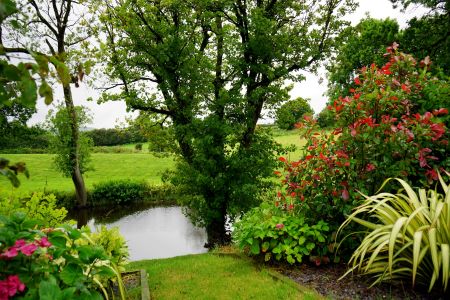

Gardens especially in Britain, are a staple in many houses are deeply correlate to a sense of British culture and high-class status. Not only can a clean garden promote an image of being well organised, but the space of the garden has created major economic and occupational developments with jobs such as gardeners and horticulture therapy. Joaquim Fillola, Managing Director of Encore Estate Management, supports the claim that gardens create a great first impression of the home by claiming, “Property developers know that first impressions are vital to their sales, so creating increasingly sophisticated communal gardens and open spaces,” is vital. It’s time to assess how gardens have adapted and how certain issues such as the pandemic and the environmental crisis has impacted how we approach our gardens. Further adding to this, more additional structures such as offices and bars being placed into our gardens. This raises questions as to how gardens now fit into home lifestyle and what these trends may suggest about how certain spaces in the home will continue to evolve.
History of Gardens
It’s important to assess how gardens were perceived in the past, in order to grapple what has led to these new developments. Gardens varied dependent on purpose, but almost a century ago it seems as if gardening was mainly used by homeowners to grow and plant foods that could be eaten or even sold in a small-scale manner. During this period, mass manufacturing had not yet come into full swing, and purchasing products may have been too expensive for people, especially when you consider that almost a hundred years ago, many people were rationing their foods due to the impacts of the various world wars.
Furthermore, the necessary forms of product storage and transportation had not been discovered, meaning that in order to source fresh and sanitary products, growing them in your own home was the most sensible answer. This suggests that ultimately, gardens were essential and a necessity for many homeowners in order to feed and gain essential nutrition and sustenance. However, once it became easier for many to access food and people’s livelihoods and wealth began to improve, many began to look at gardens in a much different manner. This is somewhat supported by the English Heritage website who state, “Civilisations around the world have been creating gardens for thousands of years, usually for the enjoyment of the rich and powerful.” Therefore, the greater accumulation of wealth from lower classes and the widening of the middle class meant that gardens were able to be viewed more than just an essential necessity to grow crops. Gardens began to become more of a statement piece of the home, almost like a form of decoration.
Read the full article in our Novmeber-December issue here: Show Home (pagesuite-professional.co.uk)
Media contact
Roshini Bains,
Editor, Showhome Magazine
Tel: +44 (0) 1622 823 922
Email: [email protected]