
Hib shares why subtle bathroom innovation is helping housebuilders deliver more adaptable and desirable homes.
As housebuilders strive to create homes that appeal to an increasingly diverse buyer market, bathroom specification is taking on a more strategic role. Whether designing for compact apartments, family homes or premium developments, the challenge is the same: to deliver spaces that feel considered, practical and desirable, without adding unnecessary complexity on site.
For hib, this is where the idea of “all shapes, all sizes” becomes more than a design statement. It reflects a wider shift in how bathrooms are being planned, specified and experienced. Instead of relying solely on large-format features or bold visual impact, developers are increasingly looking for products that work harder within every footprint, bringing together refinement, functionality and everyday usability.
Technology That Works Quietly
That change is being driven by homeowner expectations, with buyers wanting technology to be present, but not prominent. Lighting, demisting, charging and connectivity are no longer seen as luxury extras and are now part of the modern bathroom experience. The real value lies in how seamlessly those features are integrated, so that the space remains calm, uncluttered and intuitive to use.
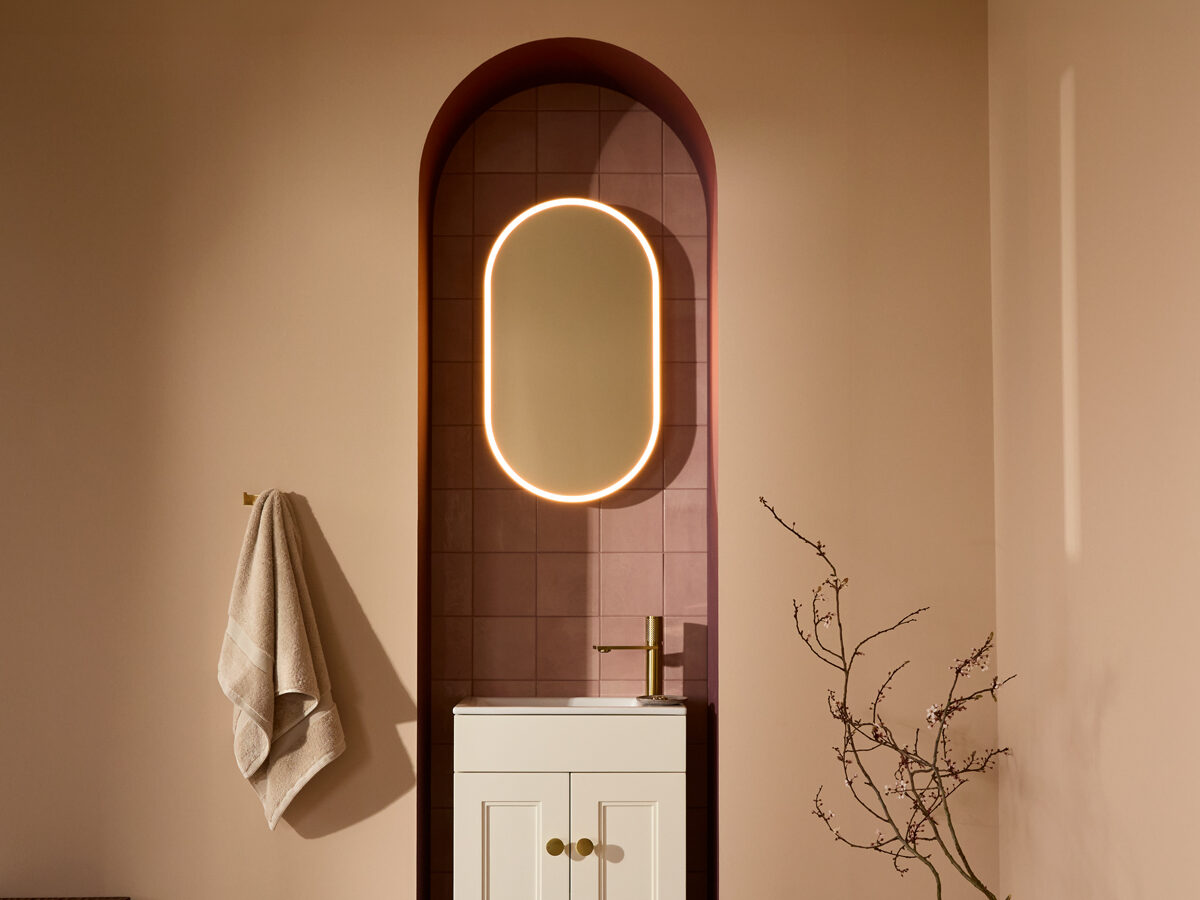
This is particularly relevant for housebuilders, where specification decisions must balance design appeal with consistency, installation efficiency and long-term performance. A mirror, for example, is no longer just a finishing touch. With the right combination of ambient lighting, concealed sockets, demisting and simple controls, it can influence how spacious, premium and practical a bathroom feels, regardless of its size.
hib’s latest product thinking reflects this move towards quieter innovation. Collections such as Radiance offer a broad choice of shapes and sizes, helping specifiers match the right mirror to the right setting while maintaining a cohesive design language across a development. Meanwhile, designs such as Spirit and Vale demonstrate how integrated technology can enhance functionality without interrupting the overall aesthetic. Spirit, for example, incorporates USB and USB-C charging alongside its illuminated design.
Flexibility On and Off Site
For developers, this level of flexibility matters. Different plots, layouts and buyer profiles call for different solutions, but the end result still needs to feel consistent, reliable and design led. Products that span multiple dimensions, formats and finishes can help create that continuity while giving design teams the freedom to respond to each individual space.
The same principle applies behind the scenes. In new build projects, installation requirements must be straightforward and repeatable. Clear fixing systems, intuitive wiring and solutions such as wireless connectivity for multi-mirror arrangements can all help reduce pressure on site without compromising the finished look. For larger schemes, small efficiencies like these can make a meaningful difference.
There is also a sustainability argument for focusing on detail, with energy-efficient LED lighting, reliable demisting and durable construction all contributing to products that perform well over time.