
A major energy refurbishment project carried out at a University of West London College has achieved dramatic improvements to the energy efficiency of both historic and contemporary buildings, replacing the complex’s gas-fired boilers with a district heating scheme fed by air source heat pumps, where ESBE valves are crucial to the management of the heating and hot water supply.
The year-long upgrade at Ruskin College which completed in March, was led by Norfolk based Finn Geotherm with its engineers installing a cascade of four Carrier 85.9 kW capacity ASHPs located in a central plant room, laying underground thermal mains around the site and also fitting new radiators along with large capacity DHW storage tanks in each of the teaching and accommodation buildings.
Managing different heating demands
Technical Director, David Alston explained, “While East Anglia is our home territory we cover all the south of England doing a lot of commercial work as well as large public sector contracts such as at Ruskin College, which has been carried out under the Government’s Public Sector Decarbonisation Scheme, with all the scrutiny and oversight that involves – as well as there being complex challenges to the installation. We had to opt for high-temperature heat pumps, capable of delivering 70+ degrees C to raise the temperature of the hot water tanks to 60 degrees (for Legionella compliance), but the radiators were designed to run at a flow temperature of 50 degrees.”
ESBE valves regulate system temperatures
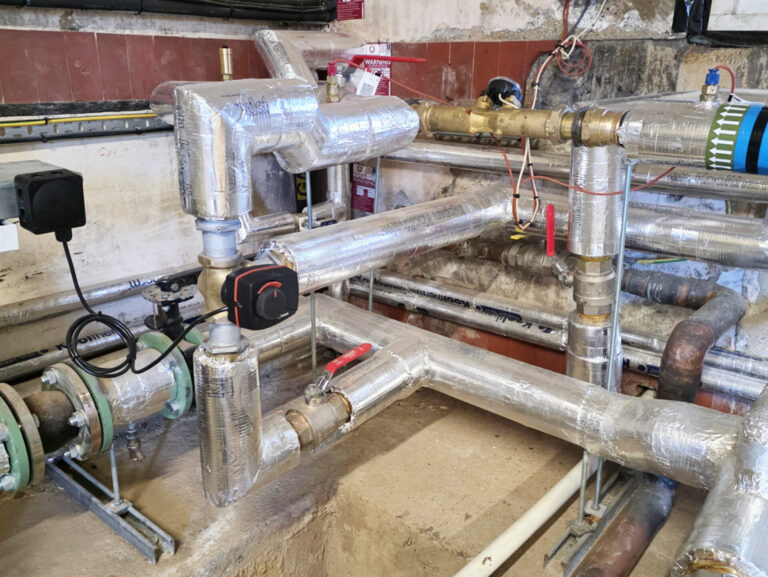
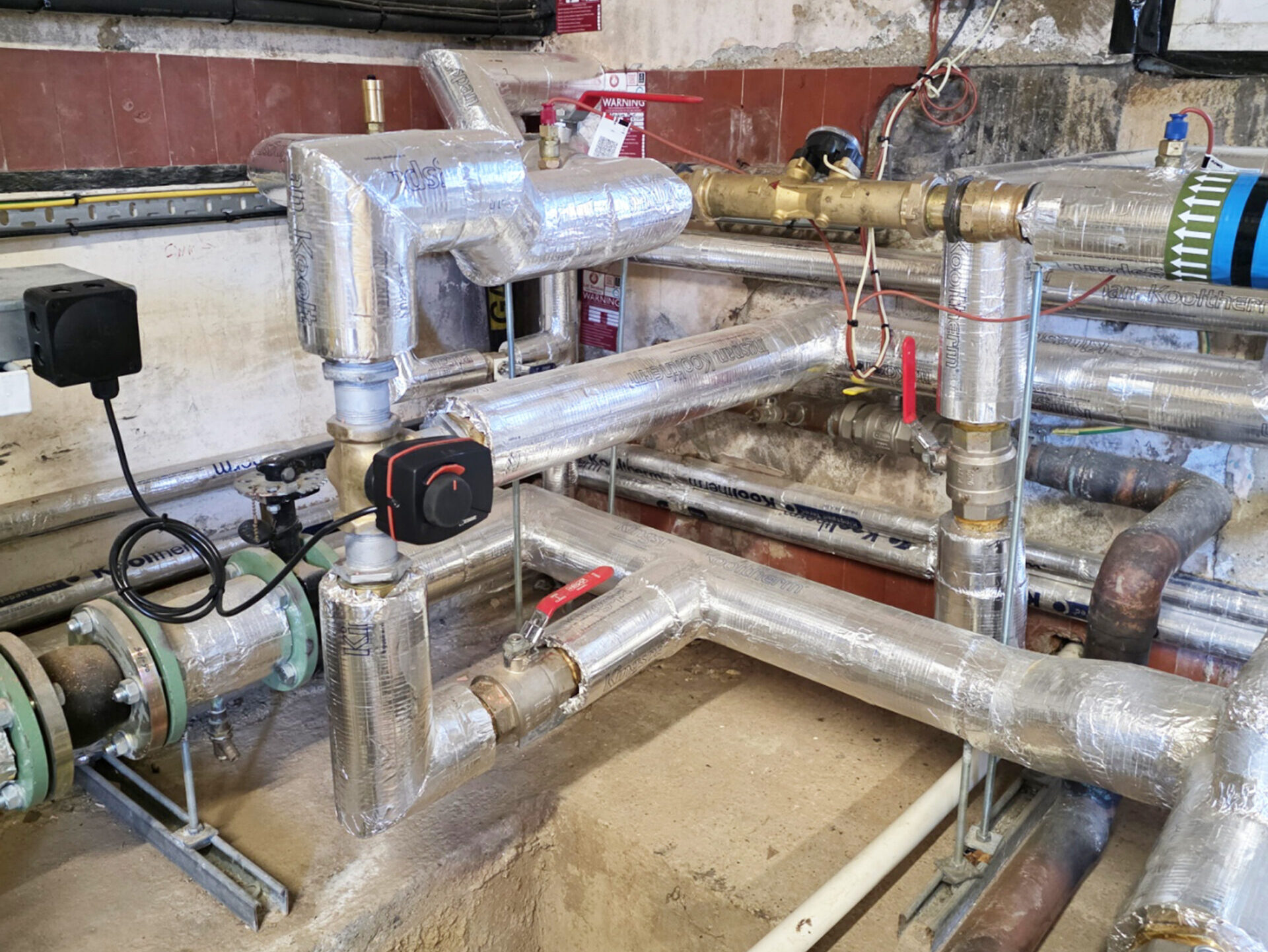
“Therefore, when there is a heating demand a signal goes back to the district heating scheme to raise the mains temperature, effectively an S-plan system for the hot water. The ESBE MBA121 valve allows us to close off the heating when we’re in hot water mode, while we’re also using the ESBE VRG131 3-port valve with ARA 659 proportional controller to regulate the temperature to the radiator circuit, with weather compensation.”