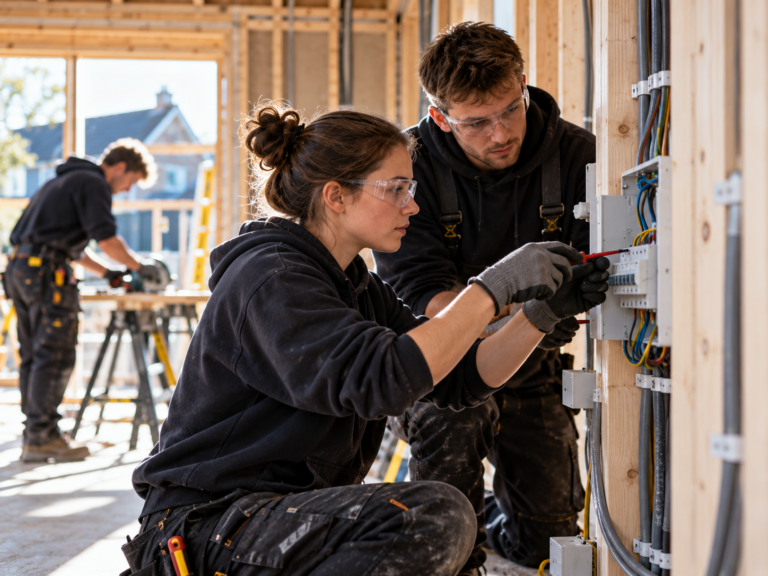
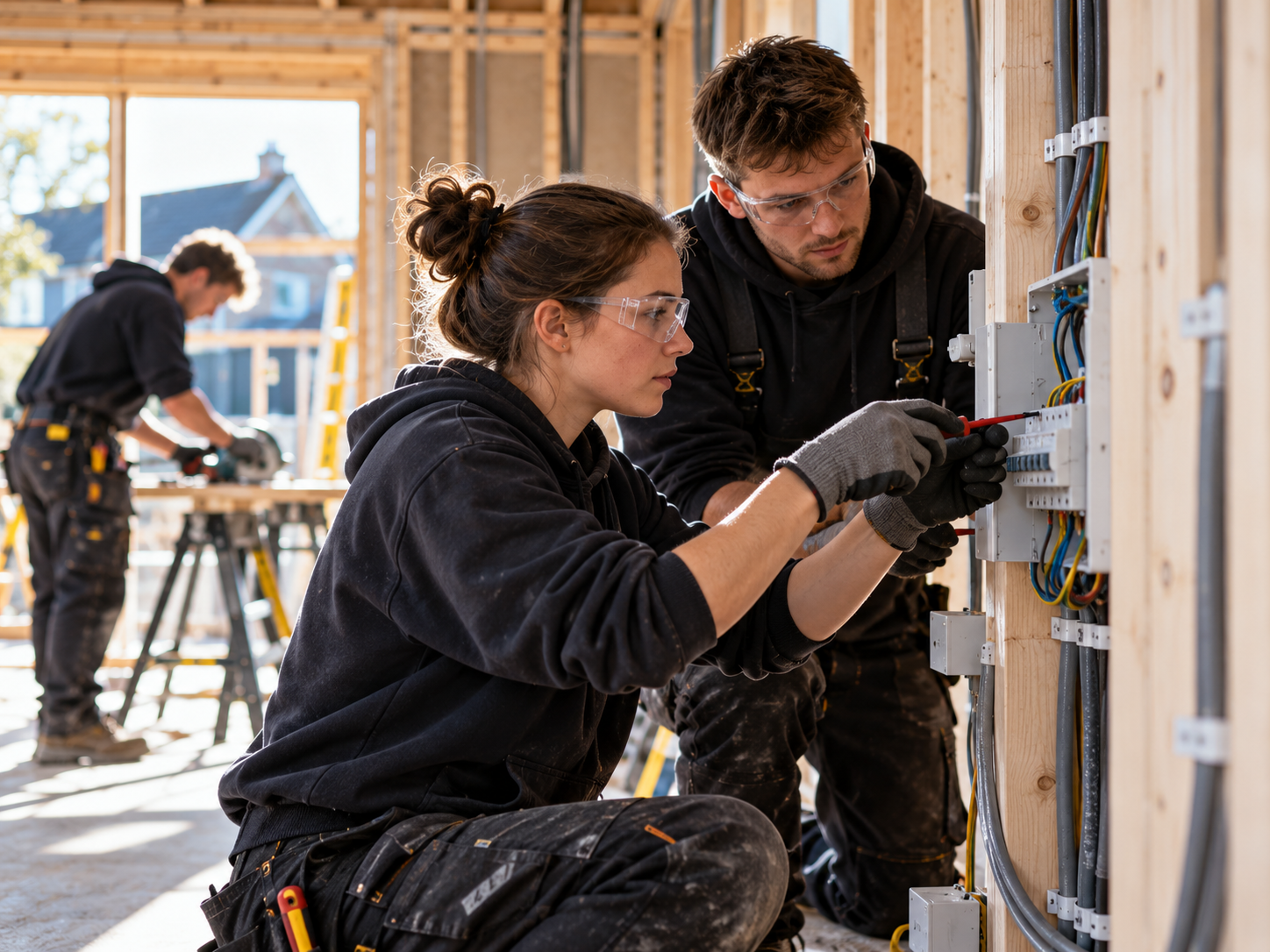

As the UK builds toward a projected shortfall of tradespeople, new research by tradesman insurance provider Protectivity has set out to reveal where in the UK has the highest interest in undertaking trade apprenticeships and filling the skills gap.
Protectivity’s research analysed Google search data relating to apprenticeships across multiple trades including electricians, bricklaying, and plumbing. The data reveals that while trades such as plumbing and carpentry generate high search interest, the overwhelming most popular trade for searches related to apprenticeships was from those looking to become an electrician.
The data also shows that based on search interest across UK cities, locals in Hereford are currently searching for trade apprenticeships at the highest volume per capita.
Electricians dominate apprenticeship searches
Protectivity’s research ranked trades by which had the largest search interest across the whole of the UK. The research revealed that the clear leading trade of choice for apprentices right now is becoming an electrician.
Between September 2025 and August 2026, the research found over 1.1 million searches relating to electrician apprenticeships. This is more than double the volume of the second-highest trade, plumbing. It is more than the next three trades (carpentry, bricklaying and plastering) combined.
The surge in search interest lines up with real momentum in the sector. Department for Education figures show apprenticeship starts in Construction, Planning and the Built Environment rose 5% to 23,900 in the first half of the 2025/26 academic year. Meanwhile, electricians are seeing their pay climb too. The latest 2026-28 JIB agreement securing a nearly 4% wage increase for the trade.
Plumbing ranked as the second most in demand trade for apprentices, with over 475,000 searches. Carpentry came in third place with 251,000 searches, followed by bricklaying and plastering on 197,000 and 134,000 respectively. The only other trade to surpass 100,000 searches is welding on 111,000.
Interest is rising, but the skills gap remains
Yet despite electricians clearly being the trade with the most interest, the pipeline into the profession is under real pressure. Electrical apprenticeship starts in England actually fell by 10% last year, against a projected shortfall of 15,000 electricians over the next five years, according to the Electrical Contractors’ Association. England’s electrical workforce has also shrunk by more than a quarter since 2018, from 214,200 to 158,000 practitioners.
Ian Hodgkinson, Construction Consultant and Project Manager on BBC DIY SOS talks about how he started his career as an apprentice and why he encourages more young people to consider the apprenticeship route. He said, “I started as an apprentice bricklayer and it gave me a career that’s lasted more than 40 years. I’ve built houses, built businesses, trained apprentices and ended up working on television, all from learning a trade.
“A good apprenticeship isn’t a second choice to university. For the right young person, it’s a first-class route into work. It gives you practical skills, qualifications, experience and the chance to earn while you learn.”
“Construction desperately needs the next generation of skilled tradespeople. My advice is simple: learn your trade properly, turn up, work hard and keep learning. A trade can take you much further than you might imagine.”
Chris Trotman, Head of Sales and Underwriting, at Protectivity commented, “Ian’s story is a brilliant example of where a trade can take you and why it’s worth seriously considering. A big motivator for conducting this research was news stories breaking this year around a growing shortage of trade skills. The role of an electrician, in particular, has been one of the key areas highlighted by projections. Seeing the high demand for electrician apprenticeships is hopefully an encouraging sign for the industry that skills shortages won’t be a long-term issue.
“Our study also found that electrician was the most in demand trade for apprentices in all the cities we analysed. This shows the popularity of the trade. It also shows the need for young workers to fill skill gaps that cover other trades such as construction and roofing.”
Where demand for apprenticeships is strongest
Protectivity’s research also reveals which UK cities have the strongest overall appetite for trade apprenticeships. Hereford emerged as the leading city in the UK with a total of 154 annual searches per 1,000 local residents researching available apprentice roles.
The city with the second highest search interest was Norwich. Aspiring trade apprentices made 129 searches per capita in the last 12 months. Additionally, Norwich was found to be the top city specifically for interest in roofing apprenticeships.
Bath ranked in third place on 119 searches per capita. No other city had more searches related to carpentry apprenticeships than Bath.
Rounding off the top five is Worcester and Lisburn. Worcester ranked fourth on 112 searches per 1,000 residents, with its total boosted by having the third highest search interest from aspiring electricians.
Meanwhile the Northern Irish city of Lisburn ranked fifth on 106 searches. Lisburn ranked as the top city for joinery and tiling apprenticeships. Despite being two of the smallest cities included in the study, two Northern Ireland cities had the highest interest in tiling apprenticeships.
Chris commented, “What jumps out is the diverse range of cities in the top 10. Eight different regions are represented, along with three of the four UK nations. It’s exciting to see smaller cities so well represented too, showing that the solution to the trade skills shortage can come from anywhere in the UK.
“Many of these aspiring apprentices will go on to become self-employed within just a few years of qualifying. Self-employed workers already make up 37% of the UK’s construction workforce, according to the latest ONS figures. That’s exactly the point where it’s easy to overlook getting the right insurance in place. Having specialist tradesman insurance cover sorted from day one means new tradespeople can focus on building their business and not worrying too much about what happens if something goes wrong on site.”