
Lee Cumberland, Director Head of Consumer Care at Beko shares how they strive for making things easier for housebuilders and developers by providing world-class scalability and aftercare.
Please introduce yourself and your role at Beko
I’m the Director Head of Consumer Care at Beko UK & Ireland, which means I oversee the end-to-end customer care experience. I’ve spent nearly two decades in the appliance industry, starting my career with Indesit, and progressing through senior service and operations roles as the business evolved through Whirlpool and is now part of Beko.
In my current role, I lead on delivering seamless customer experience at scale. That includes for housebuilder projects where we provide a wide selection of quality appliances, and a service that’s tailored from start to finish. We offer smart, reliable solutions across four trusted brands – Beko, Whirlpool, Hotpoint and Indesit – catering for all budget types, from premium family homes to space-savvy build-to-rent and student accommodation.
With increasing pressure on developers to deliver not just homes but long-term customer satisfaction, how is aftercare evolving as a differentiator in appliance partnerships?
Housebuilder priorities have shifted significantly. For example, it’s no longer just about energy ratings, there’s now a greater focus from consumers and housebuilders on the full appliance lifecycle, from how products are made to how long they last, how easily they can be repaired and what happens at end of life.
At the same time, customer satisfaction has become the defining metric. With HBF star ratings shaped by the post-handover experience, even a small issue early on can influence how a homeowner views the quality of their home. An appliance failure in the first 30 days doesn’t just reflect on the product, but the perception of the build as a whole.
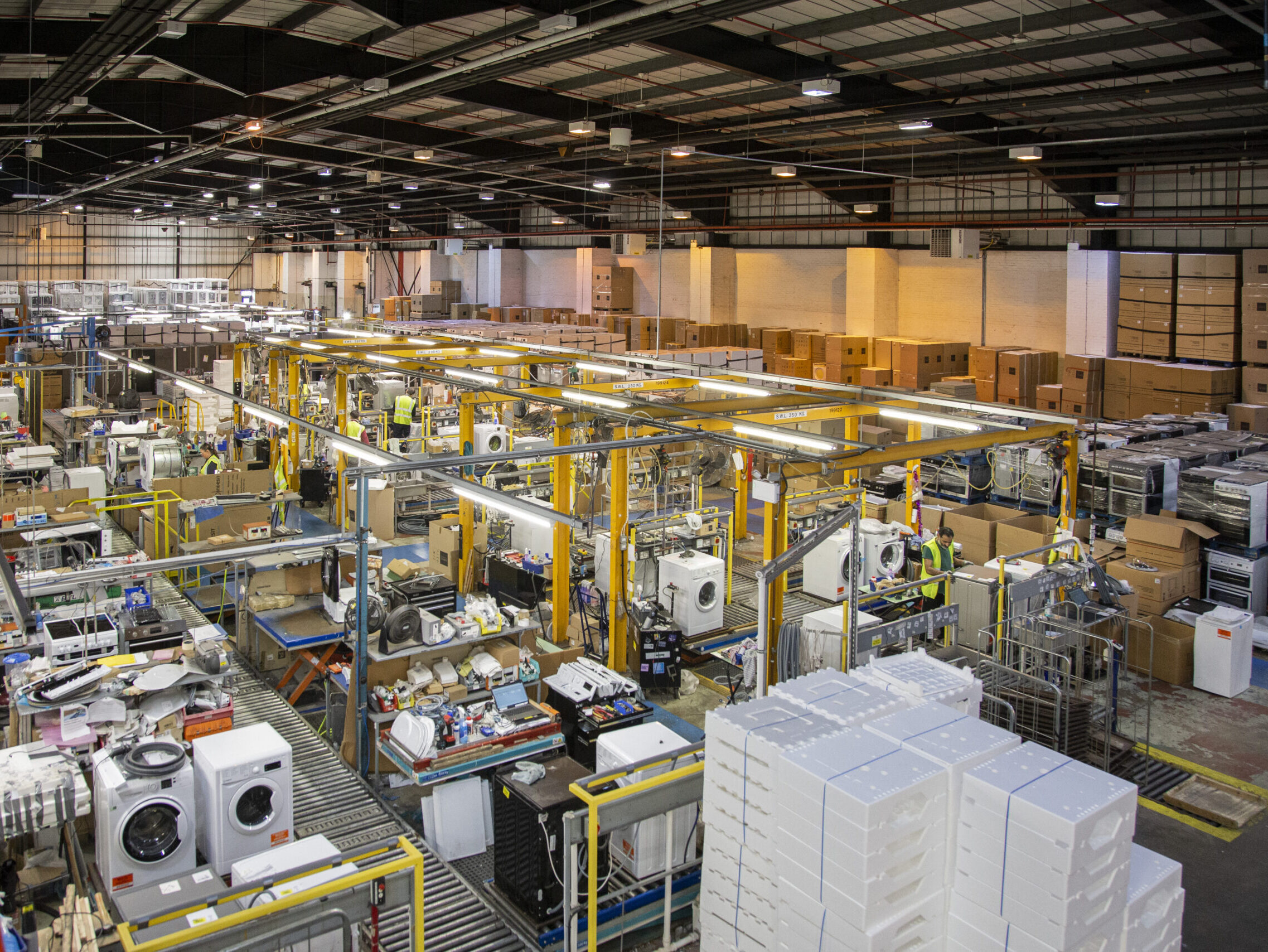
That’s where aftercare becomes a real differentiator for Beko. Our approach is designed to minimise that risk, with human-led support that resolves issues quickly. Alongside this, we’re the only UK appliance business that can bring a product to life, service it, and give it a second home through our refurbishment centre where returned products are restored to a high-quality, fully functional condition. Our centre recovers more than 80% of returns back into the market, with investment underway to grow volumes.
Your data shows that over 50% of first-contact issues within the first 30 days are resolved remotely. How is this “human-first” approach reshaping expectations around service delivery?
Faster, more convenient support is becoming the baseline. Beko carries out diagnostics over the phone through video technology, with advisors working with customers to troubleshoot issues in real time. Human support remains central to the experience throughout. It’s about giving customers confidence when something goes wrong, that they’ll get a quick, knowledgeable response without unnecessary disruption. Overall, service delivery is moving away from reactive, towards a model that reduces waiting, disruption and lessens the likelihood for replacement.
How does Beko ensure consistency in aftercare service quality across such a large and geographically diverse engineering network covering 99% of the UK?
With a service partner network of 1,100 engineers covering 99% of the UK, Beko maintains a high level of quality and accountability across the industry, backed by an industry-leading, first-time fix rate.
Beko delivers over 1 million service calls annually, with the majority carried out beyond warranty, extending product lifetimes and reducing the need for replacement. This is underpinned by continued investment in our engineers. That includes over 41,000 hours of training each year, for new and experienced engineers, to ensure skills remain consistent across regions.
Alongside this, Beko holds 1.7 million spare parts, supporting both company engineers and third-party technicians. This ensures repairs are carried out efficiently and to a high standard, helping to keep products in the home for longer. Our extended warranty package also covers parts and labour for partners, creating a consistent and dependable aftercare experience.
In what ways can strong aftercare infrastructure reduce the operational burden on site teams and customer care departments for housebuilders?
Once appliances are installed, housebuilders need confidence that any issues will be handled without coming back to them. At Beko, partners benefit from a dedicated support team that acts as a consistent point of contact, helping to streamline communication and resolve issues efficiently without adding complexity for housebuilders. This is supported by a 450-person customer service centre, which operates 364 days of the year and supports customers at every stage, prolonging product lifespan, while reducing the need for ongoing developer involvement.
This joined-up approach ensures service excellence and minimal disturbance throughout long build times.
Backed by a global manufacturing footprint of 38 facilities across 13 countries, Beko has an extensive production capacity to deliver strong supply chain resilience and cost efficiencies. This ensures products are available when needed and perform consistently, reducing additional workload for site and customer care teams.
As industry standards continue to evolve, how is aftercare becoming more integrated into the overall build and handover strategy?
More than ever, developers need confidence in supply, quality and strong, reliable brands. This means confidence in what they install will perform in real homes and support long-term affordability, while minimising customer snagging. Beko’s role is to make that as simple as possible, by ensuring aftercare isn’t something that depends on the homeowner reading a manual but is built into the overall experience from day one.
For housebuilders, where achieving a five-star HBF rating is closely tied to the homeowner experience post-handover, trustworthy products and responsive aftercare play an important role in reducing friction and supporting consistently positive outcomes.
First-time fix rates are often a key KPI for developers. What operational strategies enable Beko to achieve a 4 of out 5 first-time fix rate?
First-time fix rates are driven by how well the entire service operation is set up to resolve issues well from the outset. At Beko, that starts with the strength of the support network behind every repair. This is combined with continued investment in our engineers, ensuring skills remain consistent and up to date across the network. Access to a comprehensive spare parts network also plays a critical role. With a huge number of parts available, engineers are equipped to complete repairs on the first visit, reducing the need for follow-up appointments.
In what ways can effective aftercare reduce long-term costs for developers, particularly in relation to repeat visits and ongoing maintenance issues?
Effective aftercare helps to reduce long-term costs by getting issues resolved quickly and correctly first time. This way, repeat visits and ongoing maintenance are reduced.
Beko’s service infrastructure, including 1.1k home technicians and access to 1.7 million spare parts, ensures engineers arrive prepared, reducing the likelihood of follow-up appointments and repeat intervention. Together, this helps minimise turbulence and reduces the risk of recurring problems over time.
What does a truly effective aftercare partnership look like from a developer’s perspective, and how can appliance suppliers better support that relationship?
Housebuilders are increasingly looking for partners who can resolve issues without them being passed back. It’s about removing friction from the process and ensuring a consistent experience for the homeowner from day one.
At Beko, that means taking a full lifecycle approach. Supplying appliances, but also supporting them in real homes through responsive, human-led service and straightforward resolution when issues arise.
For appliance suppliers, the opportunity is to move beyond product alone and act as a true partner. That means aligning closely with developers’ priorities – reducing snagging, supporting long-term performance and ultimately contributing to a better homeowner experience.
Anything you would like to add?
Having expanded our portfolio in 2024, we now bring more choice to the housebuilding sector with four key global brands. This includes Hotpoint, the UK’s most trusted appliance brand with over 115 years in British homes; Indesit, which makes everyday tasks effortless for families, and Whirlpool, our most premium offering, combining sleek design with intuitive 6th SENSE technology, helping housebuilders deliver homes that feel smarter, more efficient, and ready for modern living from day one. Together, this breadth allows housebuilders to meet a wide range of needs within a single partnership.
This is backed by a service network that means when something needs attention, we deal with it and don’t send the problem back to the developer.
Beyond that, we’re investing in connected appliances and driving consistent, genuine innovation each year, evidenced by the target to deliver 20% of Beko’s sales from our top 10 hero tech ranges. At the same time, we’re expanding our refurbishment capability to continue extending the usable life of products through durability, repairability, and refurbishment – an important consideration for housebuilders when thinking about their ESG credentials.
The direction is about supporting longer product lifecycles, reducing waste, and giving housebuilders a partner they can point to when a buyer asks about sustainability credentials.