

Peter Coutts, National Sales Manager at Wren Contracts shares why choosing the right partners is about far more than price and product.
With housebuilders facing continued commercial and operational pressures, how important is choosing the right supply chain partner?
It’s critical. Housebuilders operate in an environment where managing costs, maintaining quality and delivering projects on schedule and budget all require careful consideration. Every element of the supply chain has a direct impact on those objectives.
Historically, procurement decisions have often been influenced by unit cost. While price will always be important, there’s a growing appreciation for the true value of a supply partner that extends well beyond the initial quotation.
Reliability, transparency, product quality, delivery performance, installation standards and the ability to resolve issues quickly can all have significant implications for a development’s overall cost and expectations.
A kitchen represents just one element of a new home, but if it arrives late, is damaged or isn’t installed correctly, the knock-on effects can be considerable, particularly when multiple trades and completion deadlines are involved.
How can housebuilders successfully balance cost pressures with the need to maintain quality and buyer appeal?
Value engineering shouldn’t mean compromising on the quality or durability of the finished product. It’s about making informed decisions on materials, specifications, manufacturing processes and installation methods to achieve the best possible outcome within budget.
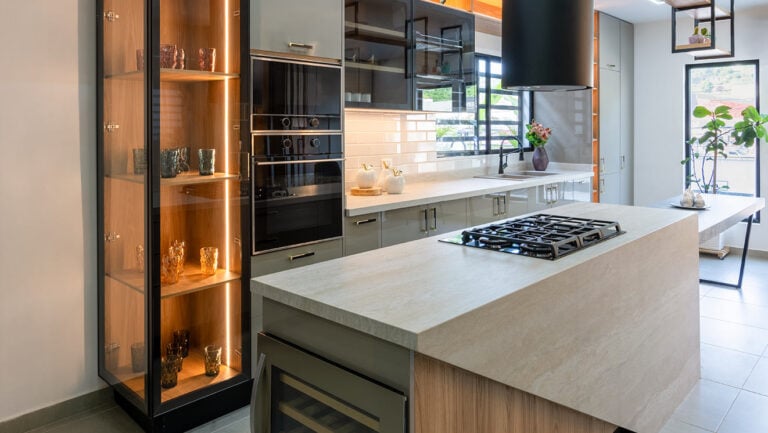
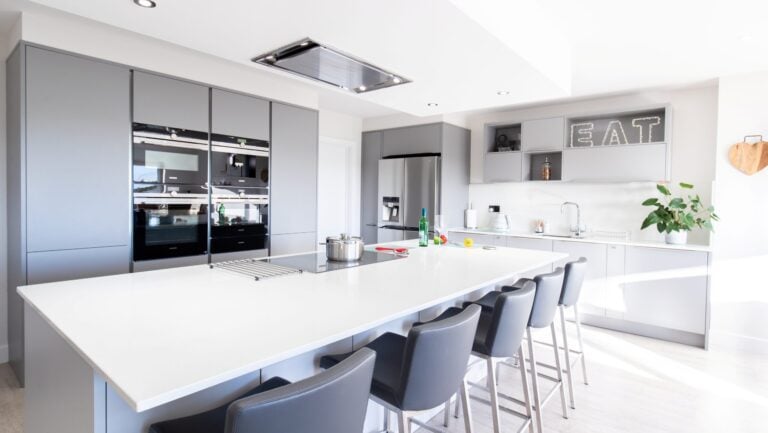
Kitchens are a particularly important consideration because they’re often the most influential room in a prospective buyer’s decision-making process. Buyers increasingly expect beautiful, functional spaces with quality finishes and features that make everyday living easier and more efficient.
A carefully considered kitchen specification can create a premium impression without necessarily carrying a premium price tag.
What are the biggest operational challenges when delivering kitchens across large housing developments?
Coordination, reliability and consistency are three of the biggest challenges.
Housebuilding programmes are complex, involving multiple trades, suppliers and contractors working to tightly managed schedules. Kitchens need to arrive at precisely the right time, with accurate specifications, complete components and installation teams ready to work. Any disruption can affect subsequent trades and potentially delay handover.
One of the most effective ways to reduce these risks is to minimise the number of separate parties involved and establish clear accountability.
Wren Contracts operates a fully integrated model covering design, UK manufacturing, delivery, installation and snagging. This gives us direct oversight of the end-to-end process and allows us to respond quickly if project changes occur.
Our own delivery fleet and in-house ‘white-glove’ trained, two-person, crews deliver kitchens directly to the assigned plot, reducing unnecessary handling and the associated damage risk.
Dedicated delivery teams also become familiar with individual developments, improving efficiency, communication and compliance.
How is technology helping to improve efficiency and transparency for developers?
Technology has an increasingly significant role to play, not just in the design of kitchens but in how projects are managed, delivered and completed.
Developers expect the same visibility and transparency from their supply partners that they have across other areas of their business. Traditional processes relying on spreadsheets, emails and manual updates often create unnecessary administration and make overall transparency and the ability to identify potential issues difficult.
We’ve invested in a dedicated digital client platform, giving developers greater visibility of project progress, timelines, costs and compliance information. Combined with regular performance reporting, this provides a more transparent, single-point and proactive approach to project management.
Technology is also transforming the design and specification process. Virtual reality tools allow developers to see realistic kitchen designs before production, helping them make informed decisions and reduce the likelihood of late changes.
The real benefit is when technology streamlines communication, reduces duplication and enables everyone involved to work from accurate, up-to-date information.
How important is UK manufacturing when it comes to supply chain reliability?
Manufacturing location, short lines of communication and direct control can make a substantial difference, particularly when developers need flexibility, consistency and certainty.
Wren manufactures to order in its three purpose-built UK facilities, giving us direct control over production, quality assurance and manufacturing schedules. This allows us to maintain shorter lines of communication between design, manufacturing and delivery teams, while responding quickly to changes in customer requirements or project programmes.
It also reduces reliance on extended international supply chains and multiple third-party manufacturers.
Our manufacturing facilities produce more than 8,000 cabinets every day, supported by advanced automation, proprietary technology and rigorous quality control processes.
Importantly, manufacturing in-house means we can continually invest in new processes, improve product performance and maintain consistency across developments of different sizes.
For housebuilders, that translates into a more responsive supply chain and greater confidence that specifications can be delivered reliably and at scale.
With buyers becoming more discerning, what should developers prioritise when specifying kitchens?
Buyers want kitchens that look impressive, work efficiently and stand the test of time.
While design trends will continue to evolve, the fundamentals of good kitchen design remain consistent: quality cabinetry, durable materials, practical storage and a layout that suits modern lifestyles.
Developers also need to consider the profile of their target buyer. A first-time buyer apartment will have different requirements from a premium family home, buy-to-let or a retirement development.
The challenge is creating the right balance between visual appeal, functionality and cost.
We’ve seen consistent interest in contemporary interpretations of classic designs, particularly slimmer shaker profiles and warm, neutral colour palettes that appeal to a broad audience.
Quartz worktops, integrated smart appliances and practical innovations such as boiling water taps can also offer opportunities to enhance specifications or provide premium customer upgrades.
However, the most successful kitchens aren’t necessarily those with the most expensive features. They’re the ones where every element has been carefully considered to deliver quality, practicality and long-term appeal.
How can developers have confidence that quality will remain consistent across hundreds of homes?
Consistency must be built into every stage of the process, rather than relying solely on checks at the end. When delivering kitchens across large developments, even relatively minor variations in manufacturing or installation can create significant challenges.
Wren has internationally recognised ISO certifications covering quality management, environmental management and occupational health and safety. We also hold seven FIRA Gold certifications across our kitchen and bedroom products and installation services.
During manufacturing, more than 40 quality checks are carried out every 30 minutes, helping ensure products meet the required specifications before leaving our facilities.
Installation is equally important. A well-manufactured kitchen still needs to be fitted correctly to deliver the expected finish and performance.
That’s why our integrated approach places such importance on trained installation teams, compliance checks and clear accountability through to final sign-off.
Sustainability is an important consideration. What should housebuilders expect from their supply partners?
Sustainability needs to be supported by meaningful investment, measurable action and long-term commitment. Housebuilders are under increasing pressure to understand the environmental impact of their developments, and suppliers should be helping them achieve their objectives.
At Wren, our approach focuses on improving efficiency throughout manufacturing, reducing energy consumption and investing in sustainable logistics.
One of the UK’s largest rooftop solar installations helps generate approximately 40% of the energy required for our manufacturing operations. We’ve also announced a £35 million investment in expanding our delivery fleet, including fully electric 44-tonne trucks and charging infrastructure, as part of our wider Net Zero by 2030 programme.