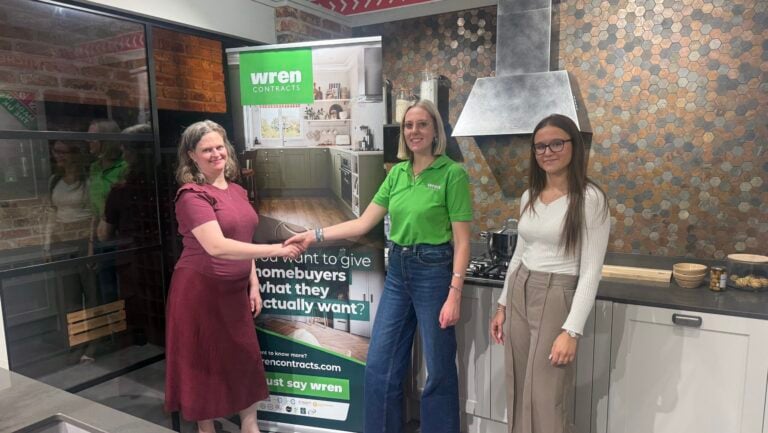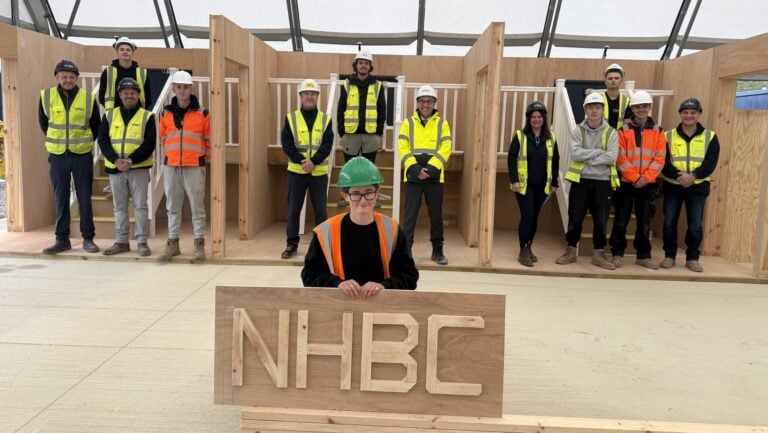


Danielle Keywood, Sector Lead for Local Authorities at NHBC, discusses the future of local authority housebuilding, tackling construction skills shortages and strengthening partnerships to deliver affordable and sustainable homes across the UK.
Congratulations on your new role at NHBC. What attracted you to the position, and why did you feel it was the right next step in your career?
I started in construction 11 years ago, and I came through the employment skills route. I began in the social purpose work within the industry around social value, or it’s also coined as corporate social responsibility. And in the last 11 years, I’ve really climbed the ladder in that part of the industry.
I knew that I was shaping a career that meant that I was really knowledgeable in one part of the sector, but that was it. So, if you asked me about social value, Section 106, employment skills, I could talk really confidently within that area. But did I understand the full life cycle of the build process? Probably not. Did I understand the nuts and bolts of the pressures the industry is facing? No.
I applied for a job because the attributes of the role really stood out to me rather than actual the company themselves. I thought, ‘I’m what they’re looking for.’ They just need to teach me how to do it because I think product knowledge is something you can be taught, but you can’t be taught to be a certain type of person.
What advice would you give to other women in construction who may be hesitant to pursue opportunities outside their existing expertise?
I think as women in the industry, we do feel at a certain disadvantage because we aren’t the majority yet, and we’re getting there.
Companies are really focused on getting that equal balance. However, when we look at the top of the seniority of organisations, there aren’t women in their masses and so naturally, women talk themselves down from things like this because they think that they can’t do it.
I just lead with nothing ventured, nothing gained. You’re not going to be a CEO of a company one day if you only know one thing about the industry. I don’t think they’re looking for subject matter experts, but definitely looking for people that have got a bit about them. More than just skills.
What do you hope to achieve within your first year?
I want to put NHBC firmly on the map for local authorities.
I really want to build relationships and focus on driving NHBC’s mission of quality, but marrying that up to what local authorities’ mission is, which is to build good quality homes.
We’re a match made in heaven and I think it just needs somebody that is consistently willing to, metaphorically, get into the room with these local authorities, understand their current thought processes on NHBC and what I can do to support them.
I think that we have a great relationship with local authorities, but it can always be grown, it can always be better and it can always be stronger.
I just want to embed myself in as many local authorities as possible across the UK. It’s a national role.
What have you noticed in your time so far with NHBC to be the biggest challenge when delivering new homes?
Coming into this job, naturally, I can see the correlation once again with local authorities. Yes, they want to build homes, but where’s the skills and infrastructure for them to actually be able to build them, and to build at the mass and pace that we need to?
NHBC have our skills hubs solution that we’ve got an incredible start with, and I can see that that’s already going to open so much opportunity for local authorities to have their local people trained. But we need to do that on a sizeable scale.
So, challenge wise, I think councils have a shortage of people in work. They’ve got big unemployment rates. For society and community to actually progress, it’s not just local authorities getting spades in the ground, it’s actually the community being supported as well.
The skills shortage is what I keep hearing. But I think, once again, I’m really confident in the offering that NHBC aren’t just a warranty provider. We’re very clear on the fact that we are a wraparound service. We’re not just saying to a local authority, work with us and we’ll be the warranty provider of your homes. We’re actually saying we want to help you with the skills shortage. We want to help you with these viability constraints.
How does NHBC help local authorities maintain consistent standards and quality across their housing developments?
I really do call it a wraparound service because we don’t just come in once the project’s created and the homes are there. We’re not just there for people to use when something’s gone wrong with the house and they need to rely on our warranty. We inspect new homes at every key stage of the construction development, and that starts right at the beginning. We’ve got some great teams, like land quality service teams, that go out and inspect land before a project is even thought about.
Builders nowadays in the UK will hold themselves to a really good standard, but our inspections allow them to constantly evolve and improve on their quality, which I think is important. You can’t ever beat a second pair of eyes.
This includes the superstructure, the pre plaster, the pre handover. It’s the really intricate levels that supersede those main stages, but actually go further into the details so that there isn’t, hopefully, a need for us at the end of the day because it’s been built right first time.
How do you see local authority housebuilding evolving in the future?
I think it’s going to be more collaborative. Sustainability is the buzzword, but it will be part and parcel of homes. I think the evolution of homes in the sustainability field is way beyond probably even my wildest dreams.
We’ve seen some really creative and innovative things that councils are doing to be really thought provoking around creating affordable homes, but also creating sustainable homes. I believe local authorities will look at the partnership model more and more. We’ve seen joint ventures being really successful with local authorities and developers, and I think more of those will probably follow suit.
Combined authorities are going from strength to strength and are real successes for their boroughs. I think could have a really positive impact on the amount of homes that local authorities are able to build.
ESG at the moment is high on the agenda for residents, councils alike, but I think that, again, is going to be something that is so ingrained in society. You don’t build a home without investing in communities.