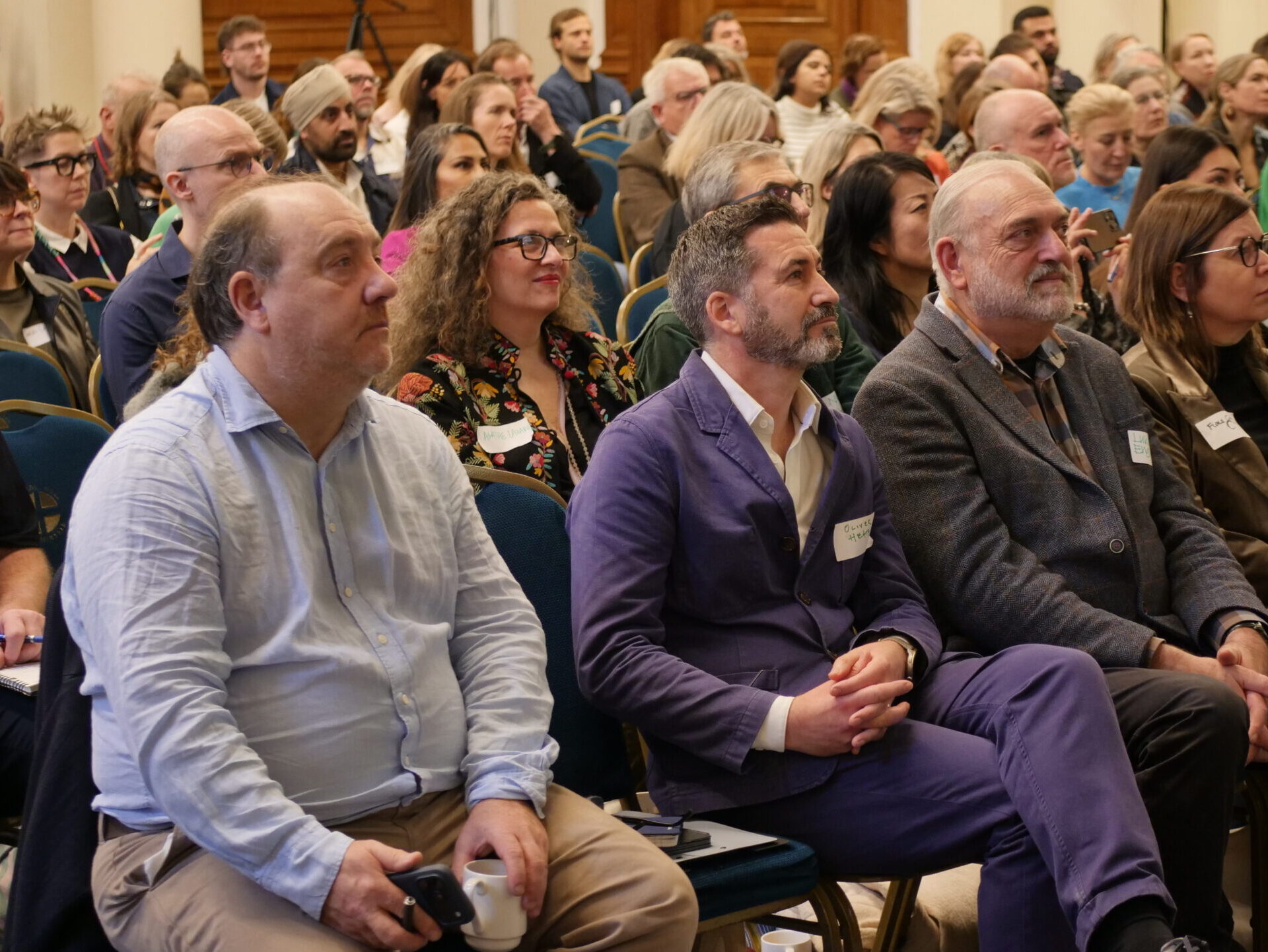

Over 200 change makers descended from all over the world on Westminster for the second Biophilic Design Conference, powered by the Journal of Biophilic Design, marking a pivotal moment in the Design world. Under the theme ‘Policy, Place, Planet – Biophilic Design for a Regenerative Future,’ the one-day event united over 35 speakers, 20 innovator exhibitors, and more than 400 international designers, practitioners, researchers, psychologists, architects – in person and online – in an inspiring day of dialogue, innovation, and action. Located in the heart of Government just steps from Parliament, at Central Hall Westminster, the Biophilic Design Conference successfully delivered its aims to shift perception and inspire action at the highest levels.
“The conference was more than an event. It was a turning point. A moment where designers, architects, planners, policymakers, scientists, investors, educators, psychologists, ecologists, and creators gathered to acknowledge something fundamental: Biophilic Design is not optional anymore. It is critical.” Vanessa Champion, Founder of the Journal of Biophilic Design and the Biophilic Design Conference.
This year’s conference focused on real-world case studies. From immersive experiences to evidence-based insights, the conference showcased how biophilic principles can transform cities, workplaces, healthcare, and education. Attendees explored topics spanning urban governance, sensory design, architecture, mental health, eco-urbanism, and material innovation, all aimed at reconnecting people with nature and driving systemic change. And innovators and practitioners, who are already designing biophilic cities, shared how wildlife has returned, air and water quality improved, mental and physical health is supported, and communities are thriving. The cross-sector audience included healthcare, education, urban design and planning, sustainability, hotels, tourism, designers, architects, construction and landscapers.
The afternoon was opened by Alex Mayer MP, member of the Transport Select Committee and Chair of the All Party Group for Woods and Trees. A long-standing environmental campaigner, she has worked on retrofit and low-carbon policy and led major initiatives on animal welfare. Alex shared a vision for creating greener, fairer and more connected places, championing community safety and sustainable design that supports healthier living and thriving local environments across towns, cities and rural areas alike.
“For too long, our built environment has been shaped by efficiency over empathy, speed over stewardship, profit over planet. Cookie-cutter housing. Streets without shade or green. Developments that scrape away the very soil that nourishes us — soil that feeds us, sustains us, holds ecosystems together, and cleans our air. This is not the future. This cannot be the future,” Vanessa added.
The rhythm of the day was impactful and focused with a mix of over 35 mini-TED talks, panel discussions and debates on a wide spectrum of themes including governance, sensory design, planning, the economics of biophilic design, wellbeing, Eco urbanism and biomaterials. Speakers included Steve Nygren, president and founder of Serenbe Wellness Community who shared lessons from Serenbe, demonstrating how biophilic communities enhance wellness. Dr Sally Augustin revealed the benefits of biophilia in neuroscience including an 8% reduction in stress and measurable gains in productivity when biophilia is integrated effectively. Oliver Heath challenged design silos, advocating for ecosystems of wellbeing and collaboration across sectors. Nick Grayson spotlighted Birmingham’s leadership as the UK’s first “City of Nature,” embedding biophilia into governance and environmental justice, and Tye Farrow of Farrow Partners Architects introduced the concept of Salutogenesis, urging architects to design spaces that actively construct health rather than remain neutral.
In addition to the keynotes, the day included three topic led sessions that focused on The Biophilic City, Biophilic Health and the Biophilic Sensory Experience.