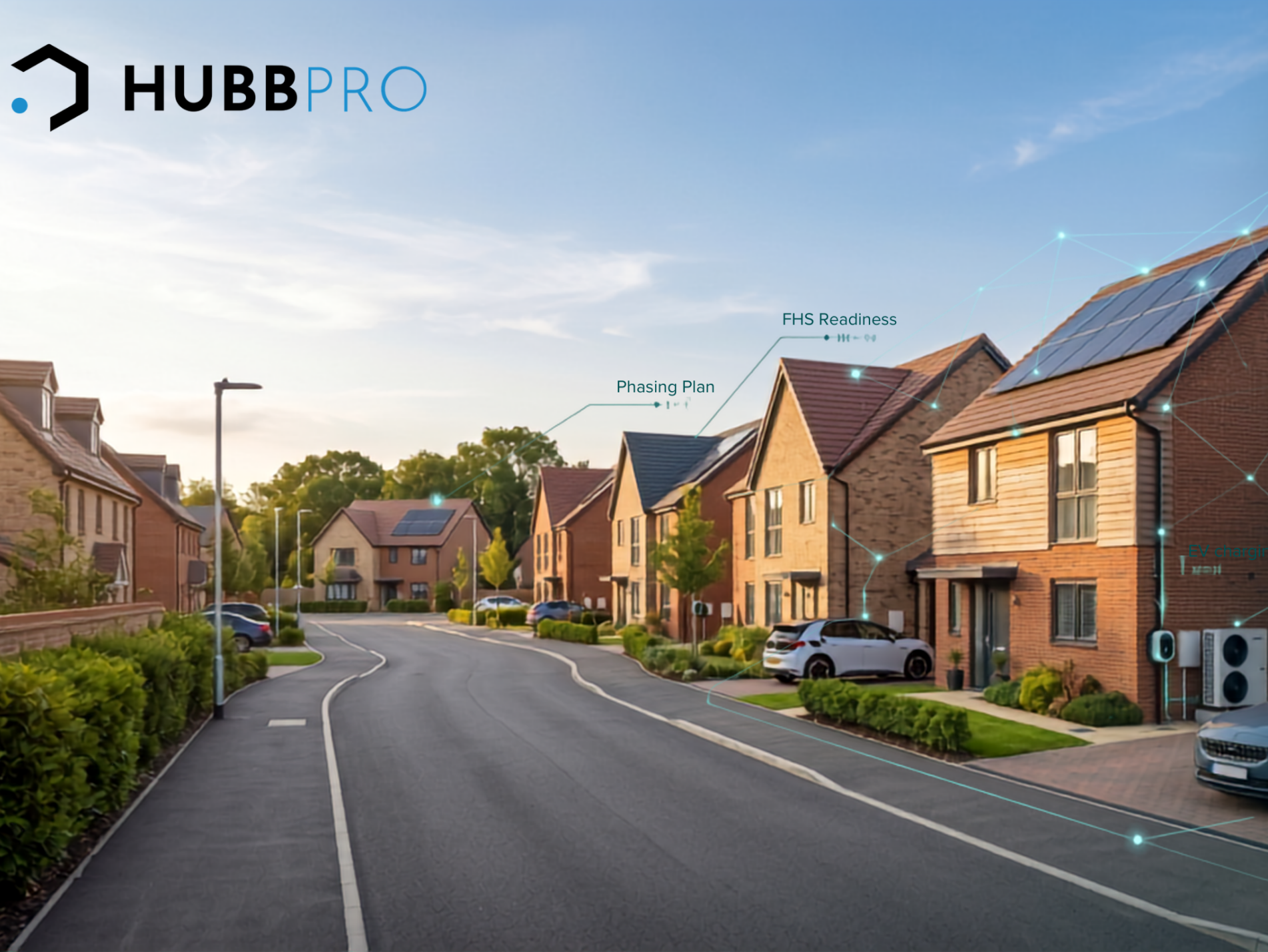

Future Homes Standard is not simply a compliance change. It changes the relationship between fabric, heating, hot water, PV, EV charging and the electricity connection. Yet these decisions are often made in separate workstreams.
That creates risk. A roof layout can be fixed before the PV requirement is understood. A grid application can be based on assumptions that overstate demand. Heating systems can be selected without testing their effects on connection capacity, costs, or residents’ bills. By the time the issues are incorporated into the cost plan, the scheme may need to be redesigned.
HubbPro was created to bring those decisions together earlier.
The platform provides housebuilders and residential developers with scheme-specific modelling of Future Homes Standard options, electrical capacity, PV generation, and export. It allows teams to compare scenarios before committing to a design route, submitting a connection application or accepting that reinforcement is unavoidable.
The aim is not to replace the design team. It is to give technical, commercial and land teams a shared evidence base, expressed in numbers they can use.
This matters because the most expensive energy strategy is not always the highest-performing one. It is often the strategy that is developed too late, when planning layouts, roof designs, utility applications, and procurement decisions have narrowed the choices.
Early clarity creates options. It can protect viability, reduce infrastructure costs, support grid conversion, and prevent compliance measures from being added piecemeal at the end.
HubbPro has made it easier to take the first step. Developers can price a scheme online, see how the process works and download a sample output before making an enquiry.