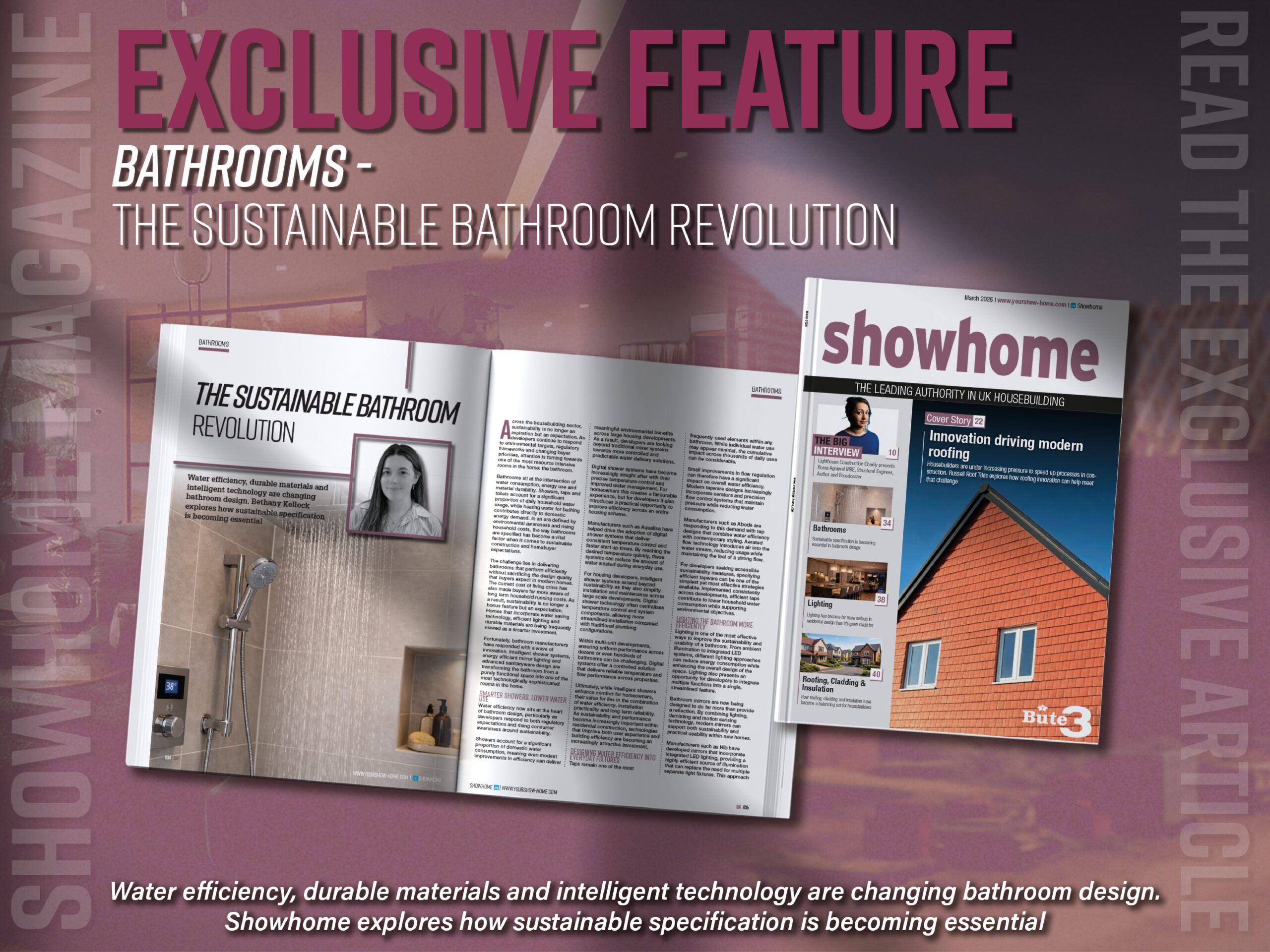

Across the housebuilding sector, sustainability is no longer an aspiration but an expectation. As developers continue to respond to environmental targets, regulatory frameworks and changing buyer priorities, attention is turning towards one of the most resource intensive rooms in the home: the bathroom.
Bathrooms sit at the intersection of water consumption, energy use and material durability. Showers, taps and toilets account for a significant proportion of daily household water usage, while heating water for bathing contributes directly to domestic energy demand. In an era defined by environmental awareness and rising household costs, the way bathrooms are specified has become a vital factor when it comes to sustainable construction and homebuyer expectations.
The challenge lies in delivering bathrooms that perform efficiently without sacrificing the design quality that buyers expect in modern homes. The current cost of living crisis has also made buyers far more aware of long term household running costs. As a result, sustainability is no longer a bonus feature but an expectation. Homes that incorporate water saving technology, efficient lighting and durable materials are being frequently viewed as a smarter investment.
Fortunately, bathroom manufacturers have responded with a wave of innovation. Intelligent shower systems, energy efficient mirror lighting and advanced sanitaryware design are transforming the bathroom from a purely functional space into one of the most technologically sophisticated rooms in the home.
Smarter Showers, Lower Water Use
Water efficiency now sits at the heart of bathroom design, particularly as developers respond to both regulatory expectations and rising consumer awareness around sustainability.
Showers account for a significant proportion of domestic water consumption, meaning even modest improvements in efficiency can deliver meaningful environmental benefits across large housing developments. As a result, developers are looking beyond traditional mixer systems towards more controlled and predictable water delivery solutions.
Digital shower systems have become increasingly sought after with their precise temperature control and improved water management. For homeowners this creates a favourable experience, but for developers it also introduces a practical opportunity to improve efficiency across an entire housing scheme.
Manufacturers such as Aqualisa have helped drive the adoption of digital shower systems that deliver consistent temperature control and faster start up times. By reaching the desired temperature quickly, these systems can reduce the amount of water wasted during everyday use.
For housing developers, intelligent shower systems extend beyond sustainability as they also simplify installation and maintenance across large scale developments. Digital shower technology often centralises temperature control and system components, allowing more streamlined installation compared with traditional plumbing configurations.
Within multi-unit developments, ensuring uniform performance across dozens or even hundreds of bathrooms can be challenging. Digital systems offer a controlled solution that delivers reliable temperature and flow performance across properties.
Ultimately, while intelligent showers enhance comfort for homeowners, their value for lies in the combination of water efficiency, installation practicality and long term reliability. As sustainability and performance become increasingly important within residential construction, technologies that improve both user experience and building efficiency are becoming an increasingly attractive investment.
Designing Water Efficiency into Everyday Fixtures
Taps remain one of the most frequently used elements within any bathroom. While individual water use may appear minimal, the cumulative impact across thousands of daily uses can be considerable.
Small improvements in flow regulation can therefore have a significant impact on overall water efficiency. Modern tapware designs increasingly incorporate aerators and precision flow control systems that maintain pressure while reducing water consumption.
Manufacturers such as Abode are responding to this demand with tap designs that combine water efficiency with contemporary styling. Aerated flow technology introduces air into the water stream, reducing usage while maintaining the feel of a strong flow.
For developers seeking accessible sustainability measures, specifying efficient tapware can be one of the simplest yet most effective strategies available. Implemented consistently across developments, efficient taps contribute to lower household water consumption while supporting environmental objectives.
Lighting the Bathroom More Efficiently
Lighting is one of the most effective ways to improve the sustainability and usability of a bathroom. From ambient illumination to integrated LED systems, different lighting approaches can reduce energy consumption while enhancing the overall design of the space. Lighting also presents an opportunity for developers to integrate multiple functions into a single, streamlined feature.
Bathroom mirrors are now being designed to do far more than provide a reflection. By combining lighting, demisting and motion sensing technology, modern mirrors can support both sustainability and practical usability within new homes.
Manufacturers such as Hib have developed mirrors that incorporate integrated LED lighting, providing a highly efficient source of illumination that can replace the need for multiple separate light fixtures. This approach can simplify bathroom layouts while reducing overall energy consumption.
LED lighting uses significantly less electricity than traditional bulbs and offers a much longer lifespan, making it a practical choice for new build properties where durability and efficiency are key considerations.
Demisting technology is another feature that adds practical value. Built in demister pads prevent mirrors from fogging after showers by gently warming the glass surface. This allows the mirror to remain clear without requiring additional ventilation or heating adjustments, improving everyday usability while supporting efficient energy management.
Motion sensor functionality further enhances efficiency by ensuring lighting activates only when the bathroom is in use. Instead of lights being left on unnecessarily, the mirror automatically switches illumination on and off as occupants enter and leave the space. Across an entire housing development, this small change in behaviour can contribute to measurable reductions in energy consumption.
Mirrors that integrate lighting, demisting and motion sensors also offer design advantages that provide a clean contemporary aesthetic. By consolidating several functions into a single installation, this will allow housing developments to reduce the number of individual fixtures within a bathroom.
Ultimately, multifunctional mirrors demonstrate how small innovations can support wider sustainability goals. They deliver practical everyday benefits for homeowners while helping developers create efficient, well-designed bathrooms that meet the expectations of modern buyers.
Furniture That Supports Sustainable Design
Sustainability in bathroom design is not only limited to water and energy efficiency. Another vital aspect in reducing environmental impact is product longevity.
Bathrooms experience significant daily wear, with moisture, temperature fluctuations and frequent use placing constant demands on fixtures and furniture. Selecting durable materials and resilient finishes is therefore essential in creating bathrooms that stand the test of time. If poorly specified products deteriorate quickly, it can lead to maintenance issues, early refurbishment and increased lifecycle costs.
Investing in high quality materials and robust construction is therefore a strategic decision. Reducing the likelihood of defects, replacements or remedial work in the years immediately following completion can help minimise maintenance requirements during any warranty periods. This will ensure that homes continue to perform as expected after occupation.
Manufacturers such as Mylife Bathrooms are focusing on modular furniture systems designed to offer both durability and flexibility. Moisture resistant materials, hard wearing finishes and solid construction help ensure that units can withstand the demands of everyday use while maintaining their visual appeal.
Longevity also supports the long-term perception of quality within a development. When bathroom furniture retains its appearance and functionality over time, it reinforces the overall value of the property and reflects positively on the developer’s building standards.
By prioritising longevity and adaptability, bathroom furniture manufacturers are helping developers create spaces that remain functional and visually appealing long after the initial installation. This helps developers maintain quality for longer, reduce maintenance concerns and strengthen the long term reputation of their developments.
Advancing Sustainable Sanitaryware
Ceramic sanitaryware play a central role in bathroom design, but advances in manufacturing and product design are enhancing both performance and sustainability.
Manufacturers such as RAK Ceramics are introducing sanitaryware designs that focus on water efficiency without compromising hygiene or usability. Refined bowl geometry and improved flushing systems allow toilets to operate effectively while using less water, helping support the growing emphasis on resource efficiency within residential construction.
Alongside improvements in product performance, the production of ceramic sanitaryware is also evolving. Modern manufacturing processes increasingly prioritise energy efficient kiln technology and refined material processing, reducing energy consumption during firing while maintaining the durability ceramic products are known for.
Ceramic sanitaryware remains one of the most dependable and practical materials available for bathroom specification. Its resistance to staining, scratching and chemical cleaning products ensures that fixtures can withstand years of daily use without deterioration. In high occupancy environments such as new build housing developments, this durability is particularly valuable.
Bathrooms that retain their appearance and functionality over time contribute to the overall perception of build quality within a property. When sanitaryware remains in good condition long after installation, it reinforces the impression of a well specified home.
Longer lasting materials also reduce the need for replacement over time. Durable sanitaryware contributes to a lower lifecycle impact by minimising waste and reducing the environmental cost associated with manufacturing replacement fixtures.
The Hidden Technology Behind Modern Bathrooms
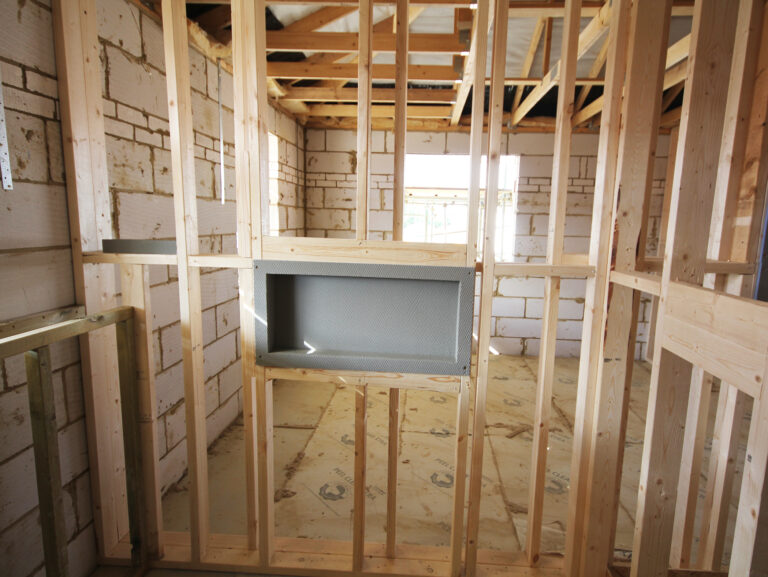
While visible fixtures define the aesthetic of a bathroom, concealed plumbing systems play a crucial role in determining its performance and functionality. Plumbing infrastructure forms the backbone of the entire bathroom environment, influencing water efficiency, reliability and maintenance requirements across the lifespan of a home.
Investing in high quality plumbing systems is essential to ensuring consistent performance across entire developments. Poorly designed or inadequately specified plumbing can lead to leaks, inefficiencies and ongoing maintenance issues, all of which can impact the durability of the bathroom and the reputation of the development itself.
Companies such as Geberit have played a significant role in advancing these concealed installation systems. By housing cisterns and pipework within a controlled internal structure, these systems allow for more precise water management while protecting plumbing components from damage or deterioration over time.
Reliable pipework, durable fittings and carefully engineered installation systems reduce the likelihood of leaks or failures that could otherwise lead to costly repairs and unnecessary material waste.
Maximising Space in Modern Bathroom Layouts
As housing density increases across many UK cities, efficient use of space has become a central consideration in bathroom design.
Developers are increasingly working with smaller footprints, particularly within apartment developments. As a result, bathroom layouts must maximise functionality without compromising sustainability, comfort or visual appeal. Smaller, well designed bathrooms require fewer materials during construction and can contribute to more efficient use of heating, lighting and ventilation once occupied.
Compact sanitaryware, integrated storage and multifunctional furniture allow designers to create bathrooms that feel spacious despite limited floor area. Wall mounted fixtures, sliding storage units and carefully planned lighting all contribute to layouts that make the most of available space while maintaining a clean and contemporary aesthetic.
Space efficient layouts can also support water and energy efficiency. Smaller bathroom environments often require less lighting and heating to maintain comfortable conditions, helping to reduce the overall energy demand within a home. When implemented consistently across an entire development, these efficiencies can contribute to meaningful reductions in resource consumption.
Sustainability as a Selling Point for New Homes
Perhaps the most significant driver behind the evolution of bathroom design is the changing expectation of homebuyers.
Today’s buyers are more aware of environmental issues and increasingly expect their homes to reflect modern sustainability standards. Water saving fixtures, efficient lighting and durable materials are no longer perceived as luxury upgrades but as essential features.
The cost of living crisis has further reinforced this shift in perspective. Homeowners are paying closer attention to the long term running costs of their properties, making efficient fixtures and systems particularly attractive.
Therefore, sustainable bathroom design represents more than an environmental responsibility. It is also a valuable selling point that aligns with the priorities of modern buyers.
Homes that demonstrate thoughtful design, efficient performance and long-term value are increasingly positioned to stand out in a competitive housing market.
For the UK housebuilding sector, the sustainable bathroom represents a powerful opportunity to combine environmental responsibility with everyday practicality.
As sustainability continues to shape the future of residential development, bathrooms will remain at the forefront of innovation, demonstrating how thoughtful design can improve both environmental performance and the everyday experience of living in a modern home.