

Accoya explores what architects and housebuilders should consider when specifying exterior wood, from durability and dimensional stability to versatility, sustainability and long term performance.
Web: accoya.com
Address: Accsys Technologies PLC, 3 Moorgate Place, London, EC2R 6EA
Tel: 0207 421 4300
What is the right wood for outdoor use?
Wood has long held a defining place in exterior architecture. From façades and outdoor living spaces to windows and doors, it offers warmth, authenticity and a connection to nature that few materials can match. Yet specifying wood for outdoor use has become one of the more demanding decisions in a project.
Expectations around longevity, maintenance, sustainability and performance continue to rise, prompting a more considered approach to material selection. Increasingly, it all comes back to a single question: what is the right wood for outdoor use? The answer depends on the goals of the project and the conditions it faces, but the most successful exterior woods almost always share four characteristics: durability, stability, versatility and sustainability.
Beyond Appearance
Outdoor environments place real demands on materials. Sunlight, moisture, temperature shifts and biological exposure all influence how wood performs over time. Two exterior woods can look identical on installation day, then diverge dramatically after years of weathering.
Four factors that shape performance
Durability comes first. The ability to withstand environmental exposure over time. It drives service life, maintenance cycles and long‑term value. Yet durability alone rarely tells the whole story.
Stability is its essential partner. Wood naturally absorbs and releases moisture, and that movement affects detailing, alignment and appearance. For many architects, dimensional stability has become one of the clearest indicators of long‑term exterior performance.
Versatility matters because exterior materials are expected to do more. Designers increasingly want a single wood that supports multiple applications, finishes and design approaches, giving creative freedom while simplifying specification.
Sustainability completes the picture. It now includes service life, maintenance and lifecycle impact. A material that stays in service longer reduces replacement frequency which is why durability and sustainability are so closely linked.
Rethinking exterior wood selection
Historically, outdoor wood was chosen for strength, appearance, hardness or low maintenance. Yet exterior performance is shaped by the interplay between durability, stability, versatility and sustainability.
Accoya®
When durability and stability work together, long‑term performance changes. Accoya manufactured from FSC® certified radiata pine undergoes a proprietary acetylation process that permanently modifies the wood at a cellular level. This significantly reduces moisture‑related movement while enhancing durability.
Projects requiring precise detailing, lasting appearance and extended service life need a material that balances several qualities at once. Accoya brings durability, stability, versatility and sustainability together in one solution.
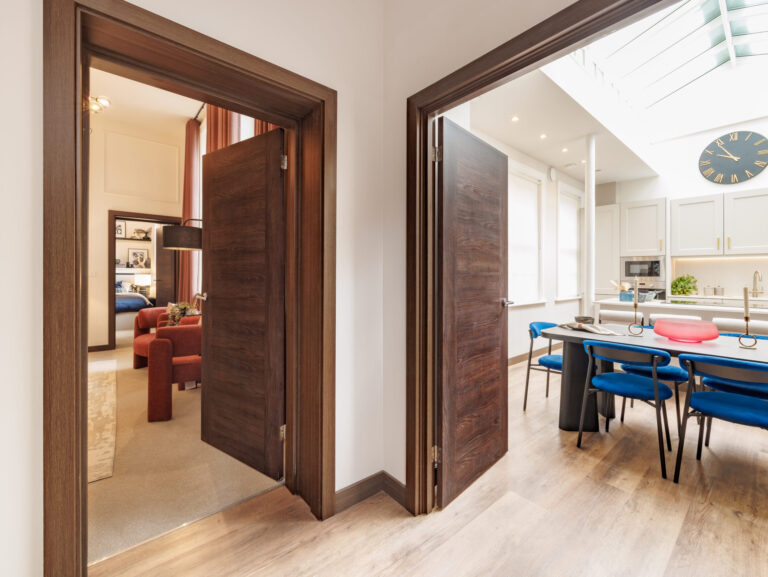
Accoya has been specified across residences, public spaces and high performance building envelopes, wherever natural wood aesthetics must be matched with long‑term performance. Its blend of durability and stability makes it a preferred choice for cladding, decking, windows and doors.
The most successful exterior projects are judged not by completion day, but by the years that follow. As expectations rise, material selection means balancing aesthetics with performance. For those seeking a natural wood that unites durability, stability, versatility and sustainability, Accoya offers a different approach to exterior performance.