
Showhome takes a look at the current landscape of housing and construction in the UK and determines the future of developing
Modern methods of construction typically begin to evolve out of uncertainty. The United Kingdom has currently come out of a global pandemic, lockdown restrictions have now lifted but left an economic imbalance in society. With the cost of living rising and the demand for housing continuing on the up, it is more important than ever to establish new and innovative types of construction to enhance efficiency and cost.
The construction industry is under repair, and it is changing drastically. With housing demands continuously growing, the construction industry is facing some huge hurdles. One of the biggest challenges is that the once-efficient building methods won’t create structures quickly enough.
Construction methods require a much-needed upgrade, especially with the growing skills shortage, and this has led to a turning point in the industry. While modular construction isn’t technically new – it has been around in some form since the 1830s – it is seeing a revival thanks to its efficiency and cost-effectiveness.
What is modular construction?
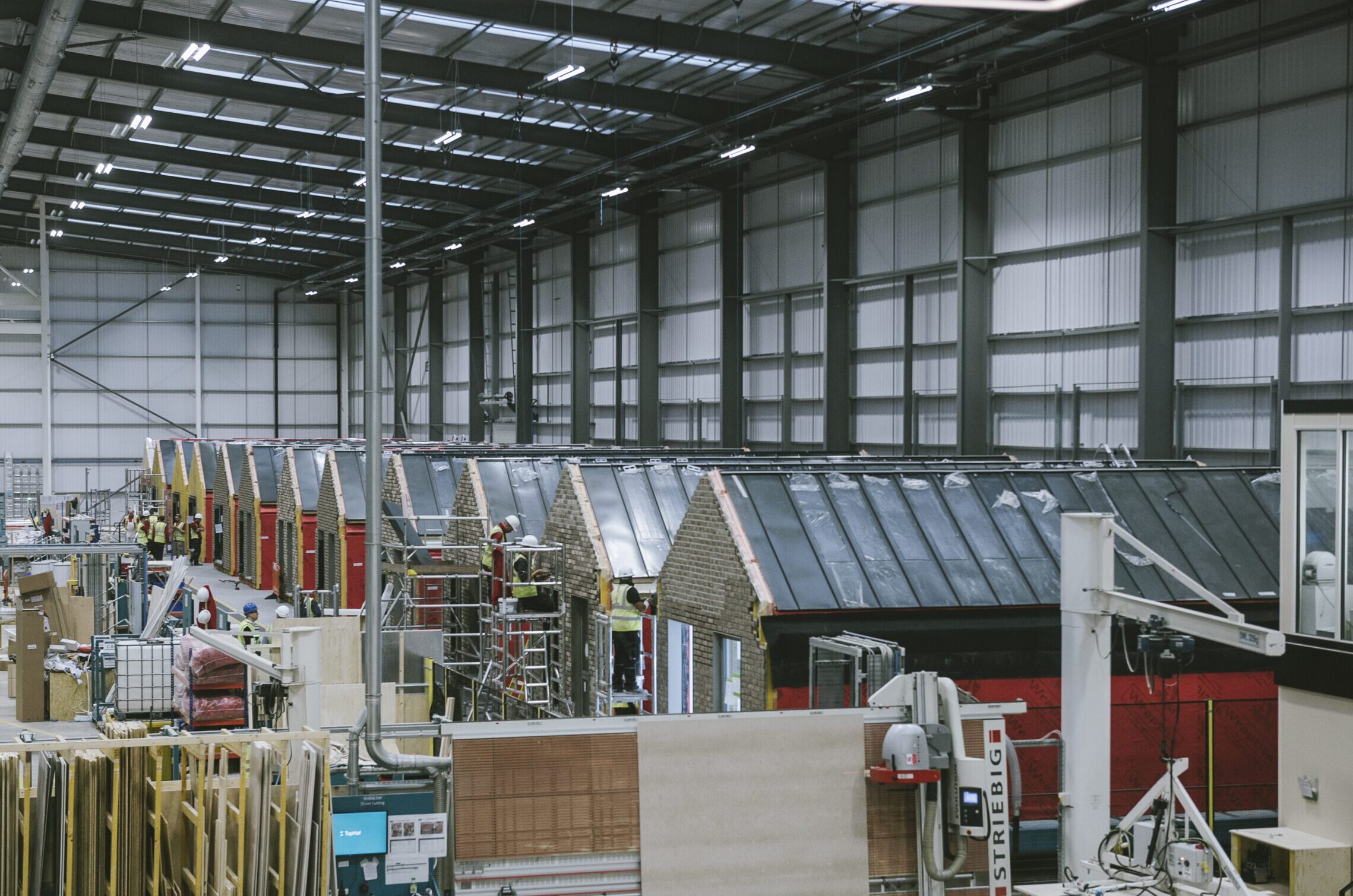
Modular construction, also known as prefabricated construction, is the process of creating the components that will make up a building off-site, often in a factory. These are then transported to the site where they are assembled, saving time digging, bricklaying and more.
Because of its efficiency, modular construction is being used increasingly over recent years. This isn’t limited to homes, either. Prefabricated buildings can also be houses restaurants, hotels and hospitality locations, among others.
It’s easy to see why modular construction becomes so popular during a housing crisis. The quick process enabled a housing boom in Britain after World War II until the somewhat utilitarian design saw it fall out of style.
But it was around over 100 years before this. The first documented prefabricated home was built in England in the 1830s before being shipped to Australia for assembly. The method then made its way across the pond to the United States in the 1840s to accommodate housing needs during the California Gold Rush.
Perhaps the most famous example, however, was Crystal Palace in London, constructed for the Great Exhibition in 1851. Made of iron, wood and glass, it only took a few months to build and after its use, it was dismantled, moved and reassembled elsewhere.
There are two different types of modular construction. Both have their own benefits and provide different features for the specific needs.
Permanent modular construction
As it says in the name, this form of modular construction is built to stay. It is made to be durable and safe; its longevity means it remains standing until it’s demolished.
The innovative, sustainable method is created with prefabricated materials to provide standalone buildings or provide as a solution for homes, flats and other integral buildings.
Relocatable buildings
This method is used for temporary buildings, but it doesn’t scrimp on safety. All relocatable prefabs still have to comply with the regulations of usable buildings, but they have the added benefit of being able to be deconstructed and moved elsewhere.
Structures such as schools, medical clinics and construction site offices are often manufactured in this way to provide fast-action, easily accessible buildings that meet immediate needs. When the buildings are no longer needed, they can be broken down and relocated elsewhere.
The current landscape
So, what does the current landscape of the housing market and construction look like today?
Ryan Gilluley is Managing Director of GCM, a Lanarkshire-based firm of cost consultants, claims and disputes experts for the construction and engineering sectors. Gilluley explores exclusively for Showhome why, despite the future looking bleak, the construction industry is…
Read the rest of the article in our latest issue
Media contact
Editor, Showhome Magazine
Tel: +44 (0) 1622 823 922
Email: [email protected]