
Lee Cumberland, Director Head of Consumer Care at Beko UK & Ireland, explains how refurbishment and repairability are helping transform appliances from disposable products into long-term assets that support both environmental goals and affordability.
Please introduce yourself and your role at Beko
I’m the Director Head of Consumer Care at Beko UK & Ireland, which means I oversee the end-to-end customer care experience. I’ve spent nearly two decades in the appliance industry, starting my career with Indesit, and progressing through senior service and operations roles as the business evolved through Whirlpool and is now part of Beko.
In my current role, I lead on delivering seamless customer experience at scale. That includes for housebuilder projects where we provide a wide selection of quality appliances, and a service that’s tailored from start to finish. We offer smart, reliable solutions across four trusted brands – Beko, Whirlpool, Hotpoint and Indesit – catering for all budget types, from premium family homes to space-savvy, build-to-rent and student accommodation.
The refurbishment and reintroduction of appliances is gaining traction. What are the biggest barriers preventing this from becoming standard practice across the wider industry?
While organisations understand the importance of refurbished appliances, delivering it at scale is more challenging. Traditional appliance retail infrastructure is designed around high volumes supplied at container scale, whereas refurbished stock is less predictable which makes planning more difficult.
There’s also an economic challenge as the perceived value of white good remains relatively low, meaning consumers are less likely to repair or maintain appliances in the same way they would a car or a smartphone. That creates pressure on refurbishment models, particularly when balancing labour, logistics, and resale value.
Route-to-market is another challenge. Refurbished appliances often have cosmetic imperfections, meaning each product may need its own photography, condition grading and pricing. That makes ecommerce more complex and time-consuming than selling new products at scale.
To support this model, Beko has dedicated outlets selling refurbished products, including at our Peterborough site and at selected end delivery satellite depots, helping to give refurbished appliances a viable second life.
Sustainability targets are tightening across UK housebuilding. How can appliance specification contribute meaningfully to achieving net zero goals at development level?
The Energy Saving Trust highlights refrigeration and cleaning appliances, including washing machines, tumble dryers and dishwashers, as a significant category of household energy use.
For housebuilders, specifying more efficient products and ensuring buyers know how to use them in the most efficient way is key to meeting customer expectations, managing reputational risk and delivering homes that perform as intended in everyday use.
Our Smart Living Index shows many households still rely on habits that feel cheaper or more efficient, despite modern appliances being designed to reduce both energy and water consumption.
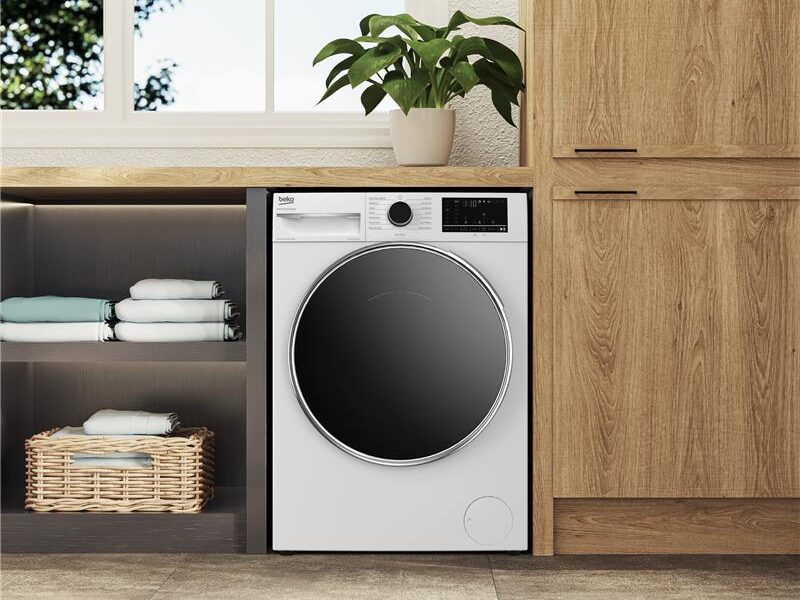
One of the biggest misconceptions is that quicker always means more efficient. In reality, Eco mode works more like a marathon than a sprint. It uses lower temperatures and longer cycles to reduce overall energy consumption. At a time when households remain under financial pressure, helping people use appliances more efficiently could play an important role in reducing both costs and emissions.
What role does product design and durability play in enabling circularity, particularly when it comes to repair, refurbishment, and reuse?
Extending the usable life of its products through durability, repairability, and refurbishment is a key focus for Beko. We are the only manufacturer in the UK operating a dedicated refurbishment line, where returned products are restored to high-quality, fully functional condition.
For us, circularity starts with customer care. Most customer issues can be resolved remotely or during an engineer visit, reducing unnecessary returns and extending product life. In the UK, we operate the largest appliance service network, with over 1,100 engineers and 99% national coverage, supported by a 450-person contact centre operating 364 days of the year.
Our diagnostics capability, remote support and warehouse holding of over 1.7 million spare parts, delivers first-time fix rates of four out of five incidents, cutting repeat visits and unnecessary handling. That level of operational control is what makes reverse logistics commercially viable.
By resolving issues quickly and capturing products that can be refurbished and resold, we retain value within the system rather than losing it through disposal.
Beko has refurbished over 35,000 appliances in 2025 alone. What operational changes were required to scale this level of circular activity? What lessons can the wider industry take from it?
Our refurbishment programme transforms returned appliances into high-quality second-life products at factory scale. The approach ensures appliances remain functional, while cutting waste and cost. It also brings essential home appliances within reach for more households without compromising performance or safety, while contributing to the circular economy.
The wider lesson for the industry is that circularity cannot sit separately from core operations. Managing products effectively at end of life is becoming increasingly important, particularly for housebuilders when thinking about their ESG credentials.
To what extent is consumer demand influencing the shift towards sustainable and circular appliance models, and is the industry moving fast enough to meet expectations?
The refurbished appliance market is expected to reach $19.3BN by 2029, fuelled by rising consumer emphasis on economic and reliable product choices, alongside growing awareness of environmental concerns.
For the industry, the challenge surrounds a consumer expectation that refurbished products should perform like new. That means quality, warranties and aftersales support are non-negotiable. Building trust in circular appliance models depends on delivering a seamless customer experience, with consistent points of contact, responsive support and reliable service throughout the product lifecycle.
If circularity were to become a regulatory requirement in UK housebuilding, how prepared is the appliance sector to respond at scale?
The appliance sector is moving in the right direction, but readiness across the industry is likely to vary significantly. Delivering circularity at scale requires far more than good intentions. It depends on having the infrastructure, service capability and reverse logistics networks in place to support repair, refurbishment and recovery effectively.
At Beko, we have already invested heavily in these areas through our refurbishment operations, engineering network and reverse logistics capability. If circularity becomes a regulatory requirement, collaboration across manufacturers, retailers, logistics providers and policymakers will be essential to ensure the industry can respond consistently and at scale.
Your Peterborough site reportedly recovers over 80% of returned products back into the market. What processes or technologies are critical to achieving such high recovery rates?
Beko’s circularity model covers the full product lifecycle – from supplying first life appliances, through delivery and installation, to collecting old appliances back through reverse logistics, refurbishment, recycling and resale. Returned products are brought back through our reverse logistics network and sent to our Refurbishment facility in Peterborough, where they are either refurbished or recycled depending on condition.
Handling returns at scale requires significant infrastructure, skilled resource, and strong diagnostic capability. Achieving high recovery rates depends on having the operational infrastructure, service network and expertise in place to identify which products can be repaired, refurbished, and returned to market efficiently.
How can the industry better align sustainability goals with affordability, ensuring circular solutions remain viable for developers and accessible for buyers?
Cross industry collaboration is essential. Manufacturers design for durability and repair, logistics providers manage forward and reverse flows, retailers shape the returns experience, and policymakers set the framework.
But collaboration works best when it is underpinned by operational capability. Without the infrastructure to repair, recover and redeploy products at scale, circularity remains difficult to deliver in practice.