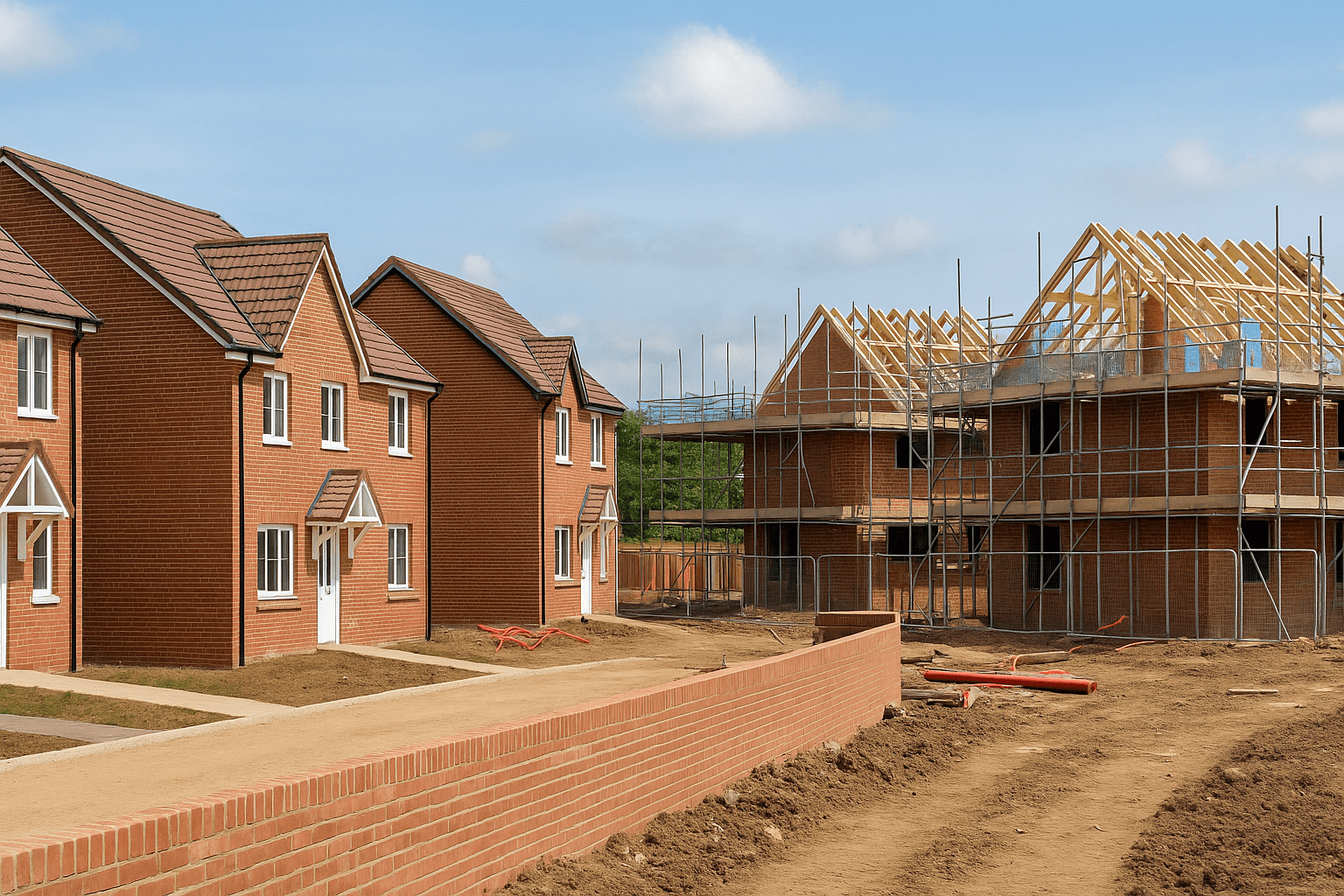

New mayoral regions across England are set to receive almost £200m a year for new homes in a renewed push to revive the Government’s stalled to build 1.5 million homes.
The funding announcement comes as the UK’s new-build market continues to struggle, with planning approvals and construction numbers falling sharply.
The intervention follows a stark warning from Savills just two months ago, when the agency reported that new-build sales had reached their lowest point since before the 2008–09 financial crash. The firm described the situation as “dire”, highlighting growing concern within the sector.
Housing Secretary Steve Reed said the additional funding would give mayors the ability to accelerate local housing schemes by preparing development sites, unlocking stalled projects and supporting the early stages of new housing delivery. The money will be distributed to Cheshire and Warrington, Cumbria, Greater Essex, Hampshire and the Solent, Norfolk and Suffolk, and Sussex and Brighton. The largest allocations will go to Hampshire and the Solent, and to Greater Essex.
However, the scheme is already drawing criticism. Funding will not be fully released until after the first mayoral elections take place – but those elections have been delayed. As a result, regions in the East and South East will receive only a third of their allocated funding for the next two years, with full payments pushed to May 2028. In the North West, where elections have been postponed until 2027, areas will receive only half of their allocation next year.
According to Inside Housing, MPs have warned that the delays will create uncertainty for councils and developers attempting to plan future housing delivery. Many fear that staggered payments will mean further slowdowns at a time when the building programme is already under significant strain.
Official figures from the Department for Levelling Up, Housing and Communities show England is currently producing around 210,000 homes a year – far short of the 300,000 annual target required to meet the Government’s pledge. Planning permissions have also fallen to their lowest level in more than a decade, underscoring the scale of the challenge ahead.